



Chamomile
Chamomile, or Matricaria chamomilla, a small flower with big effects
Chamomile, or Chamomilla vulgaris, is known for its analgesic and anti-inflammatory properties. At Boiron, we only use plants that are picked fresh and quickly processed to preserve all their benefits.
Chamomile: it has many names as it has benefits
Chamomile or Chamomilla vulgaris is also known as Matricaria chamomile, German chamomile, lesser chamomile and wild chamomile. One might justifiably ask why this plant has so many names. However, what we do know, is that it has numerous health benefits. Chamomilla was known to the ancients as an antispasmodic, an anti-fever medication and a solution to facilitate digestion.

Chamomile: a traditional medicine?
The plants described by the ancients are sometimes difficult to precisely identify. Nevertheless, it would seem that chamomile varieties were already used for their medicinal virtues by the Egyptians, Greeks and Romans. Closer to home, under Charlemagne, one of the herbaceous plants recommended for cultivation in the famous text Le Capitulaire De Villis is “febrefugia”. This is believed to be our present-day Matricaria chamomile.
What does chamomile look like?
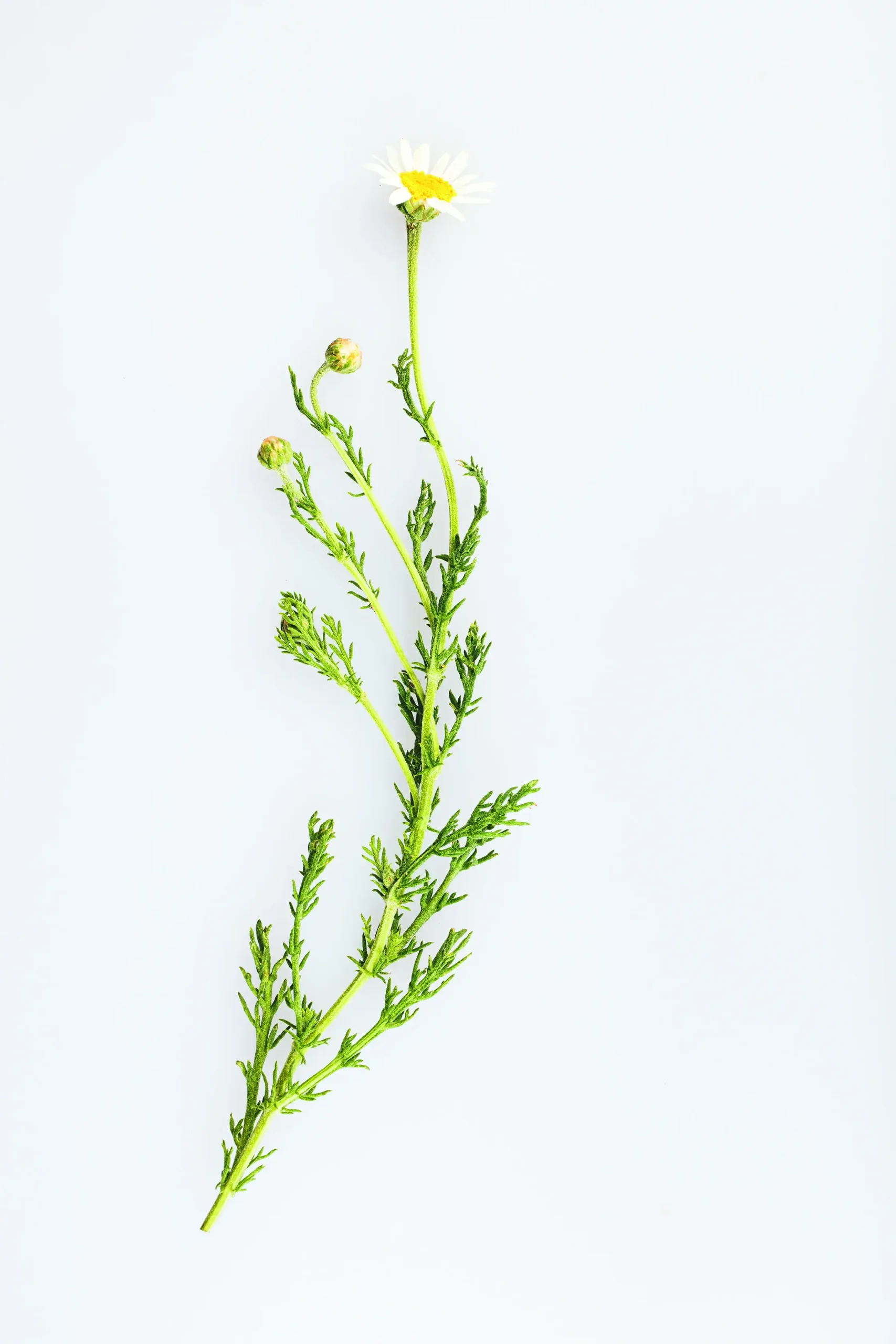
An herbaceous plant of 20 to 50 centimetres, chamomile can be found almost everywhere in Europe. It is part of the Compositae (or Asteraceae) family and grows in the undergrowth. Its erect stems have leaves divided into strips. These plants have capitula flowers (i.e., bunches of small, miniature flowers) that are tube-shaped and light yellow in the centre, with white petals on the periphery. When these flowers are crushed between the fingers, they give off a characteristic pleasant and aromatic scent.


The benefits of Chamomilla
Chamomilla contains many active ingredients, some of which have amazing anti-inflammatory properties. Among the health-promoting compounds of Chamomilla are flavonoids, coumarins, phenolic acids and an essential oil. And, especially in its flower heads, we also find a large number of minerals that contribute to the body’s proper functioning.
One of the well-known uses in homeopathy
Today, in homeopathic preparations, chamomilla is used in particular to soothe painful episodes of teething pain in infants. Chamomilla may also have a calming effect in very agitated children.
Opinion of the WHO
The World Health Organization (WHO) recognises chamomilla as an “adjuvant in the treatment of minor inflammatory conditions of the gastrointestinal tract” and also as an “antibacterial and antiviral agent (…) also used to relieve eye strain and treat urinary tract infections and diarrhoea.”

Written in collaboration with:
Dr. Khalil Taoubi
Ph.D. in pharmacognosy. Expert in botany, toxicology, and pharmacopoeia.